
Robotics Software Engineer: What Is It?
Robotics is rapidly evolving and integrating into various fields, from mechanical engineering to artificial intelligence (AI). Robotics systems generally include manufacturing tools or machines, medical equipment, military equipment, or vehicle robotics systems. At the center of this transformation and innovation lies a critical role: the robotics software engineer.
This article will teach us more about the role of robotics software engineers.
| Key Takeaways: |
|---|
|
What is Robotics Software Engineering?
A Robotics Software Engineer is a specialist professional who designs, develops, tests, and maintains the software that controls and powers robotic systems.
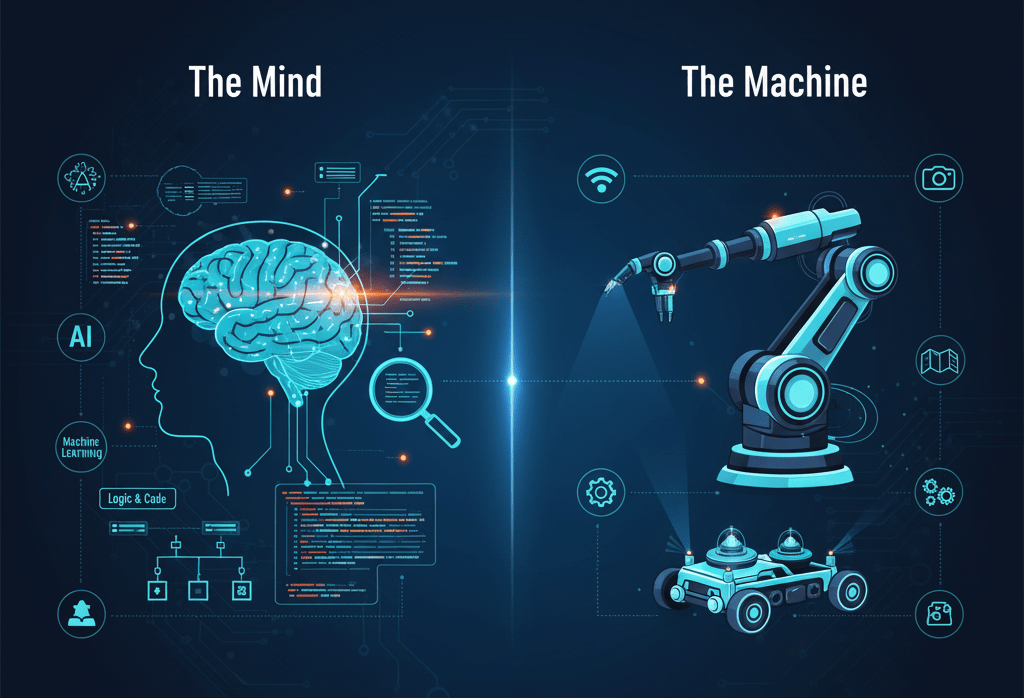
A robotic software engineer combines coding expertise with knowledge of robotics to develop software that enables robots to perform tasks. Their work goes beyond programming; it integrates software with hardware systems to ensure adaptability, performance, and seamless operation.
Robotic software engineers work on the algorithms, interfaces, and control systems so that robots can perceive, navigate, and interact with their environment. These functions are performed using the Robot Operating System (ROS).
Robotic software engineers enable robots to:
- Use sensors and cameras to perceive their surroundings.
- Make decisions with the help of algorithms and AI.
- Interact with their environment through motors and actuators.
- Use learning and feedback systems to adapt to new challenges.
In essence, hardware engineers focus on building robots’ physical components, and robotics software engineers give them “brains” and “behavior”.
What Does a Robotic Software Engineer Do?

The following are some of the core responsibilities of a robotic software engineer, although their day-to-day duties may vary depending on the project and organization:
1. Algorithm Development
Robotics software engineers design algorithms for navigation, motion planning, pathfinding, control systems, localization, mapping, and perception. These algorithms are essential for robots to perform their tasks.
2. Sensor Integration
Engineers interface with sensors like LiDAR, ultrasonic, infrared, GPS, and IMUs to enable robots to perceive and interact with their environment through physical movements.
3. ROS Development
ROS is an open-source framework that facilitates communication between robot components. Engineers in this domain work extensively with ROS to enhance robot functionality. They also integrate hardware and software components to ensure seamless communication.
4. Embedded and Real-time Systems
Robotics software engineers often program embedded systems where timing and resource constraints are critical.
5. Machine Learning and AI Integration
Machine learning, computer vision, deep learning, and reinforcement learning are elements of advanced robotics. These are the AI components that engineers integrate to enable decision-making and adaptability.
6. Simulation and Testing
Robotics software engineers employ simulation tools like Gazebo, Webots, and V-REP to test and validate the robot’s performance in virtual scenarios before deploying it in real environments. Testing is important to make sure that the robot’s software is robust and can handle various situations and conditions.
7. Code Optimization and Maintenance
As robotics works in real-time, code optimization for reliability, efficiency, and scalability is crucial. Maintaining up-to-date code is also necessary, and it is done by timely identification, fixing issues, and updating it regularly.
8. Collaboration and Communication
Robotics software engineers collaborate with cross-functional teams of hardware engineers, mechanical engineers, and other specialists to develop robotic systems. They also present project progress, test results, and technical findings to team members and stakeholders.
Essential Skills and Tools for a Robotic Software Engineer
A robotic software engineer requires a combination of theoretical knowledge and practical expertise. The following table summarizes these essential skills and tools a robotic software engineer should possess:
| Tools/Skills | Details |
|---|---|
| Programming Languages |
|
| Frameworks and Libraries |
|
| Simulation Tools |
|
| Hardware Proficiency |
|
| Soft Skills |
|
Robotic Software Engineer Education Requirements
A robotics software engineer comes from one of the following academic backgrounds:
- Computer Science
- Electrical Engineering
- Mechanical Engineering
- Mechatronics
- Robotics Engineering
A Bachelor’s or Master’s degree is typically the minimum requirement, though many professionals pursue PhDs, particularly for roles involving R&D, advanced robotics, or AI integration.
An engineer usually studies the following relevant coursework:
- Control Systems
- Artificial Intelligence
- Embedded Systems
- Computer Vision
- Kinematics and Dynamics
- Signal Processing
- Data Structures and Algorithms
Certifications and Continued Learning for a Robotic Software Engineer
The robotics field is evolving continuously. While a degree provides the required foundation, continuous learning is essential to stay current. Here are some popular certifications and courses:
- ROS Certification from The Construct or edX
- NVIDIA Jetson AI Specialist
- Udacity’s Robotics Software Engineer Nanodegree
- MIT OpenCourseWare – Robotics Courses
- Coursera offers specialized courses in AI, Robotics, and Computer Vision
Attending conferences like ICRA (International Conference on Robotics and Automation) or RSS (Robotics: Science and Systems) can also provide exposure to cutting-edge developments and networking opportunities.
A Robotic Software Engineer’s Career Path and Growth
The following table shows various roles a robotics software engineer can assume during his/her career:
| Level | Roles |
|---|---|
| Entry-Level |
|
| Mid-Level |
|
| Senior |
|
| Long-Term Opportunities |
|
Robotic Software Engineer’s Salary
According to Glassdoor, a robotic software engineer can earn anywhere between $71,024 and $206,397. This number, however, varies depending on the candidate’s experience, skill set, and location.
Industries and Applications to Work For
Robotics software engineers are in high demand across a wide range of industries. Here are some industries where robotics software engineers can start their careers.
-
Manufacturing and Automation
- Industrial robots for assembly lines
- Cobots (collaborative robots) working alongside humans
-
Autonomous Vehicles
- Self-driving cars and drones
- Software for path planning, perception, and decision-making
-
Healthcare and Medical Devices
- Surgical robots
- Rehabilitation and assistive robotics
-
Agriculture
- Robotic harvesters, drones for crop monitoring
- Automated irrigation and planting systems
-
Defense and Aerospace
- Unmanned aerial and ground vehicles, drones
- Reconnaissance and bomb disposal robots
-
Consumer Electronics
- Home robots like vacuums and lawnmowers
- Smart assistants with mobility
-
Space Exploration
- Mars rovers and robotic arms on satellites
- Autonomy for long-distance missions
Working on real-world projects is also the best way to learn and demonstrate expertise in the field. Some examples are:
- An autonomous robot car with camera navigation
- A robotic arm that sorts colored objects
- SLAM (Simultaneous Localization and Mapping) implementation using ROS
- ROS packages or simulation environments update (open-source)
Challenges Faced by Robotics Software Engineers
Despite all the perks and benefits, this career has unique challenges:
- Integration Complexity: It is complex to make all the robot’s parts, viz., hardware, software, and sensing, work in harmony.
- Real-Time Constraints: Robots must perform in real time, as they are safety-critical applications with tight timing constraints. Maintaining real-time operations is a challenge.
- Debugging Difficulties: Diagnosing failures in robotics systems through the hardware and software layers is challenging. It requires deep insights and tools.
- Cost of Testing: Testing robotics systems also involves physical environments and real-time factors, making it challenging and expensive.
- Rapidly Evolving Tech: With advancements in AI, processors, and hardware interfaces, engineers must keep up, and this demands continuous learning.
The Future of Robotics Software Engineering
Undoubtedly, the demand for robotics software engineers is set to grow exponentially. Here are some of the future trends:
- AI and Robotics Convergence: More robots will use AI concepts like deep learning for perception and control.
- Swarm Robotics: Complex tasks like warehouse logistics will be handled by coordinated teams of robots.
- Cloud and Edge Robotics: Robotics systems will balance processing between cloud servers and edge devices.
- Human-Robot Collaboration: Safe, intuitive, and intelligent collaboration between people and machines will be prioritized.
The World Economic Forum predicts that robotics will be among the top drivers of job growth through 2030, with software roles particularly critical.
Conclusion
A Robotics Software Engineer is not just a programmer or coder; he is a system thinker, problem solver, and innovator. They work to enable machines to sense, think, and act in the physical environment, transforming how people live or industries operate.
From developing surgical robots to autonomous vehicles, robotics software engineers have left their mark everywhere. This career not only offers a job but a mission to shape the future for those who have a passion for intelligent systems, real-world impact, and interdisciplinary problem solving.
Whether you’re a student planning your academic path or a professional looking to pivot into robotics, your journey is just beginning with vast opportunities and stimulating challenges.
 |